

Every commercial office strives to control thermal comfort – such as temperature, humidity, and airflowand indoor air quality (IAQ), including clean air, low pollutant levels, and proper ventilation. These factors directly influence employee health, comfort, and overall performance.
Managing thermal comfort and IAQ is more than just a facilities concern; it’s a strategic decision that enhances productivity, safeguards employee well-being, and fosters a supportive, high-performing work environment. Organizations that invest in these areas often experience increased efficiency, reduced turnover, and a stronger, more reputable corporate image.
As HVAC systems typically account for the largest share of energy consumption in commercial buildingsoften ranging from 40% to 60% of total energy usethey are a critical area of focus for design engineers. The need to reduce operating costs, meet increasingly stringent energy codes, and support environmental sustainability makes energy-efficient HVAC design a top priority. In today’s built environment, efficiency is not just a design goal but a fundamental expectation. Among the most effective strategies is the use of Variable Air Volume (VAV) systems, which adjust airflow based on real-time demand.
VAV systems significantly reduce fan energy consumption, optimize temperature control, and contribute to lower peak loads, making them a core component of sustainable and intelligent HVAC design. Their integration supports long-term operational efficiency, occupant comfort, and a reduced carbon footprintkey outcomes in both green building initiatives and cost-effective facility management.
Proper commissioning of a VAV (Variable Air Volume) air distribution system is crucial for the optimal performance of an air conditioning (AC) system. Even a well-designed VAV system can underperform, leading to energy waste, poor comfort, and IAQ issues. Commissioning ensures the system works efficiently, reliably, and as intended from day one. It is a necessity for modern HVAC systems
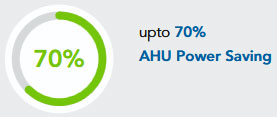
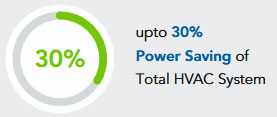
With a VAV (Variable Air Volume) system, the average air volume delivered by the air handling unit (AHU) is typically around 6570% of the maximum design airflow. This reduction in airflow significantly decreases the fan motor’s energy consumptionby approximately 70%thanks to the fan affinity laws, which state that fan power varies with the cube of the airflow. As a result, the AHU fan uses about 30% of the energy compared to constant volume systems. Overall, this contributes to an estimated 30% energy savings for the entire HVAC system.

● Reduced energy usage means lower utility bills.
● Less wear and tear on equipment extends system life and reduces maintenance needs.
● Often eligible for green building certifications (e.g., LEED) and energy rebates

● VAV systems can incorporate demand-controlled ventilation (DCV) using CO sensors.
● This ensures fresh air is delivered based on occupancy, reducing over-ventilation and maintaining indoor air quality efficiently.

● Offices often have different thermal needs (e.g., corner offices, interior rooms, conference rooms).
● VAV systems provide independent temperature control in each zone by modulating airflow, improving occupant comfort.
● Reduces hot/cold complaints and maintains consistent temperatures across the space.

● VAV systems are easy to integrate with modern BMS (Building Management System) for centralized control, monitoring, and fault detection.
● Enables smart scheduling, trend analysis, and remote diagnostics
Our Expertise help us to achieve Quality output using our High-Tech Infrastructure, Technology, Knowledge and Experience in this business crafts us Industry Experts.
